

Blog

Signature Lawn and Landscape LLC

How to Find the Best OSB Supplier in China?

Choosing a China Osb Supplier is not simply a price comparison. OSB performance depends on panel grade, thickness, resin system, and production control. A board that looks consistent on a sample may behave differently across a full shipment. Small details matter: edge swelling, thickness tolerance, surface quality, and clear batch records.

Industry data helps explain why careful sourcing matters. The UNECE/FAO Forest Products Annual Market Review 2023–2024 tracks production, trade, and market conditions across wood products, including wood-based panels. Its market coverage is a useful starting point, but broad industry trends cannot confirm one factory’s quality. Ask suppliers for current product specifications, test reports, and traceable production records. Check whether documents match the exact grade and facility being offered. A certificate with an unclear scope proves little.

This guide explains how to compare Chinese OSB manufacturers using practical checks: product capability, quality assurance, communication, logistics, and total landed cost. Request samples from the intended production line, not only showroom stock. Confirm packaging, container loading, lead times, and procedures for handling defects before placing an order. Then compare like with like. A low quotation may exclude important requirements, while a polished catalog is not proof of consistent output. No single checklist removes every risk. Supplier claims still need independent review, and that takes time.
How to Find the Best OSB Supplier in China?

Match the Required Use to EN 300’s Four OSB Classes

When comparing OSB suppliers in China, start with the intended use, not the quoted price. EN 300 defines four classes. OSB/1 is for general-purpose, non-load-bearing use in dry conditions. OSB/2 is load-bearing, also for dry conditions. OSB/3 is load-bearing in humid conditions, while OSB/4 is designed for heavy-duty load-bearing use in humid conditions.

“Humid” does not mean permanently wet. Roof sheathing, wall panels, or flooring near occasional moisture may call for OSB/3, depending on the design. A dry interior application may suit OSB/1 or OSB/2. For higher structural demands, consider OSB/4. Confirm the expected loads, exposure, thickness, and applicable building requirements with a qualified designer. The class alone cannot determine whether a panel suits a project.

Ask suppliers for current technical data and test documents that identify the relevant EN 300 class. Check thickness tolerances, edge condition, and batch consistency; compare these details with a physical sample. A label alone is not enough. I would also confirm how panels are stored and protected during shipping, since damp edges can complicate inspection on arrival. Documentation can look convincing, yet still leave practical questions unanswered. A clear answer about the exact product and batch matters.

Confirm Panel Size: 1,220 × 2,440 mm Is a Common Format

When comparing OSB suppliers in China, confirm whether 1,220 × 2,440 mm is the finished sheet size or a rounded nominal format. APA’s Engineered Wood Construction Guide identifies 4 × 8 ft panels as a standard reference size. Converted exactly, that is about 1,219 × 2,438 mm, so the metric dimensions commonly quoted in sales documents are rounded. Ask for a signed product specification showing length, width, thickness, and permitted dimensional tolerances. Small differences matter when sheets must meet framing or fit a fixed opening.

Request a sample and measure it at several points with a steel tape, not just from the label. Check the edges, squareness, and thickness; a panel can look right while varying enough to complicate installation. Check the actual sheet. Also confirm whether the quoted dimensions include tongue-and-groove edges, and ask how panels are protected from moisture during storage and shipping. A clear drawing and packing list help prevent mismatches between the sample and the delivered batch. This sounds fussy, perhaps. But a buyer who confirms the format before ordering can compare quotations more fairly and estimate coverage with fewer surprises.

How to Find the Best OSB Supplier in China? - Confirm Panel Size: 1,220 × 2,440 mm Is a Common Format

Item to Confirm Common Specification or Fact What to Check with the Supplier
Common panel format 1,220 × 2,440 mm is a commonly offered OSB sheet size. Confirm whether the quoted dimensions are nominal or finished dimensions, and request a sample or written specification.
Panel area A 1,220 × 2,440 mm panel covers 2.9768 m², or approximately 2.98 m². Use the stated dimensions to check the number of sheets required for the project; allow for cutting waste.
Other market formats Formats such as 1,250 × 2,500 mm and 1,200 × 2,400 mm are also offered in some markets. Check availability, actual dimensions, and packing details for the specific order. These formats are not available from every supplier.
Thickness options OSB is manufactured in a range of thicknesses; commonly listed options include 9, 11, 12, 15, 18, and 22 mm. Confirm the required thickness and its permitted dimensional tolerances in the applicable product specification.
Edge profile Panels may be supplied with square edges or profiled edges, such as tongue-and-groove, depending on the product and market. Specify the edge profile on the purchase order and verify whether it changes the usable coverage dimensions.
OSB grade under EN 300 EN 300 defines OSB/1 for general-purpose, non-load-bearing use in dry conditions; OSB/2 for load-bearing use in dry conditions; OSB/3 for load-bearing use in humid conditions; and OSB/4 for heavy-duty load-bearing use in humid conditions. Match the grade to the intended application and request documentation identifying the declared grade. “Humid conditions” does not mean permanent outdoor or wet exposure.
Intended application Required performance depends on the use, support spacing, loading, exposure, and applicable building requirements. Ask for technical data relevant to the intended use; do not select a panel by thickness alone.
Dimensional and visual inspection Panel dimensions, squareness, thickness, surface condition, and edge condition can be checked against the agreed specification. Agree on inspection criteria before production and document how non-conforming panels will be handled.
Compliance documents Product standards and documentation depend on the destination market and the project requirements. Request applicable test reports, declarations, or certificates, and confirm that they cover the exact product grade and thickness being purchased.
Order and packing details Sheet count per package, package dimensions, and gross weight vary by panel thickness and supplier packing method. Confirm the sheet count, package measurements, gross weight, moisture protection, and loading plan before shipment.

Note: Sizes and thicknesses shown are common market examples, not a guarantee of availability or a substitute for the supplier’s current technical specification.

Compare Bending and Internal-Bond Tests Under EN 310 and EN 319

When comparing OSB suppliers in China, ask for test reports, not only product brochures. EN 310 measures bending strength and stiffness along both board axes. EN 319 measures internal bond strength, showing how well the board resists tension through its thickness. The distinction matters: a panel may bend well yet still have weak core bonding. Small details matter.

Check the report’s board thickness, conditioning, sample count, and test date. For example, EN 300 lists OSB/3 minimum bending strengths of 22 MPa along the major axis and 11 MPa along the minor axis for 6–10 mm boards; the listed internal-bond minimum is 0.34 MPa. Requirements vary by thickness, so compare like with like. FAO’s Global Forest Products Facts and Figures 2023 reports global wood-based panel production at about 400 million cubic metres in 2022, a useful reminder that broad market scale does not verify one factory’s batch.

Ask the supplier to link each report to a production lot and identify the testing laboratory. Check whether results meet the relevant EN 300 class, rather than relying on a single high-value sample. A recent report is helpful, but it cannot guarantee the next shipment. I would also request independent retesting for large orders; it adds time, yet removes some guesswork. One awkward point: paperwork can look complete while omitting the minor-axis result.

Check Formaldehyde Results Against the E1 Limit of 0.124 mg/m³

How to Find the Best OSB Supplier in China?

When comparing OSB suppliers in China, treat the E1 figure as a test result, not a sales claim. For a chamber test reported in mg/m³, compare the result with the stated E1 limit of 0.124 mg/m³. Ask which method was used, when the sample was tested, and whether its thickness and surface condition match your order.

Request a report for the same product grade and production site you plan to buy. Check the laboratory name, report number, sample description, and test date. A low reading is useful, but it may not represent every batch. Production settings can shift. Also confirm that the test method supports comparison with this limit; results from different methods may not be directly comparable. If details are vague, ask for clarification or a recent independent test before accepting the quotation.

Tips: Save the report with your purchase records. Ask whether the supplier can provide updated results for later batches. A little extra checking may feel slow, but it can help prevent an unexpected mismatch after delivery.

Assess Factory Capacity, Lead Times, and Export Documentation

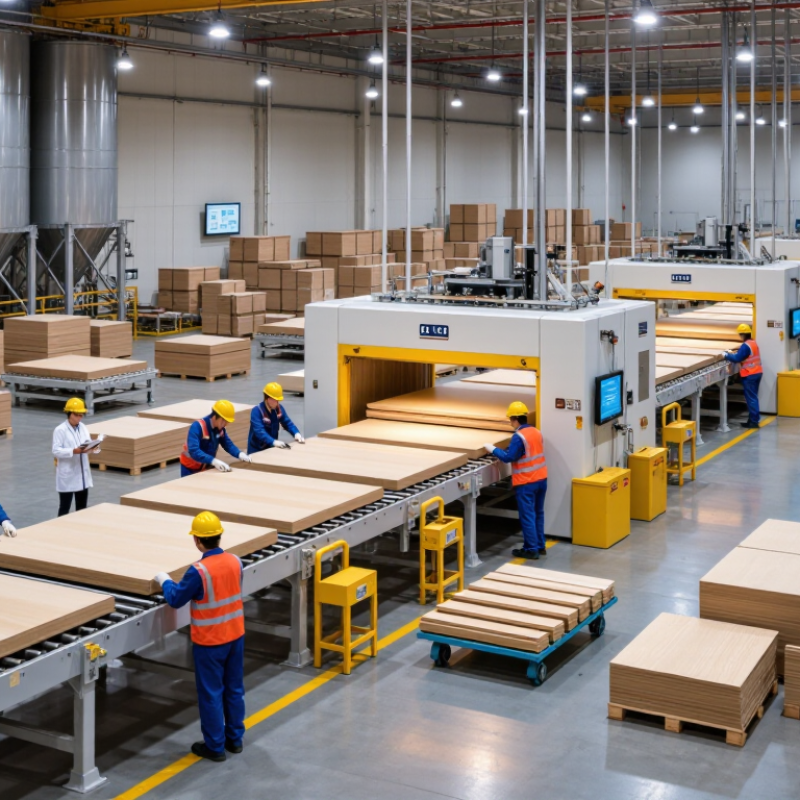
When choosing an OSB supplier in China, look beyond the factory’s stated monthly output. Ask how many production lines are running and whether capacity is already committed to other orders. A video tour can help, but request recent production records and inspection reports too. Check board thickness, edge quality, and surface consistency on physical samples. Small defects matter when panels are stacked tightly. Numbers can look reassuring. Verify them.

Lead times should include more than manufacturing days. Ask for a written schedule covering raw-material preparation, production, inspection, packing, and port delivery. Confirm what happens during busy seasons or if a production run needs rework. I would not treat an optimistic estimate as a firm shipment date. Build in a buffer, especially when vessel space is limited. For export documentation, agree on the required commercial invoice, packing list, and transport documents before production starts. Requirements may vary by destination, so have your customs broker confirm any additional certificates or details.

Tips: Request a sample document set with sensitive information removed. Check that product descriptions, quantities, and package marks match across documents. One mismatch can create avoidable delays.

How to Find the Best OSB Supplier in China?

Assess factory capacity, lead times, and export documentation.

Suggested assessment weights—not measured market data. Verify capacity with production records and sample orders, confirm lead times against written schedules and shipment history, and check that export documents match the destination market and purchase contract.