

Blog
Signature Lawn and Landscape LLC
How to Choose Cat Litter Sand for Wholesale?
Choosing Cat Litter Sand for wholesale requires more than comparing price per ton. A product that looks affordable may create higher costs through dust, breakage, poor absorption, or customer complaints. Wholesale buyers must examine the entire supply chain, from mineral quality and processing to packaging, storage, and delivery. The right choice protects retailer margins and supports a better experience for cats and their owners.
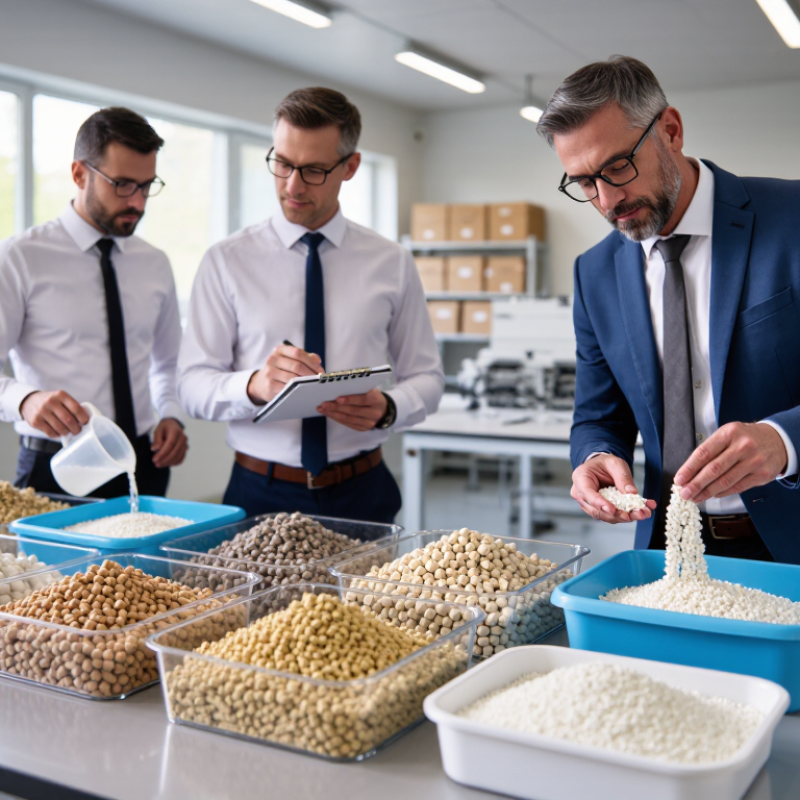
In practice, experienced buyers request samples before placing large orders. They check particle size, odor control, clumping speed, moisture content, and dust levels. A simple trial can reveal important details. Pour the sand into a clean tray, add a measured amount of water, and observe the clump after several minutes. Does it hold together? Does it stick heavily to the tray? Does fine dust rise into the air? These small tests offer more reliable evidence than polished product descriptions.
Supplier reliability matters just as much. Review production capacity, quality-control records, packaging strength, and response times. Ask whether every batch follows the same specification. Some suppliers perform well during one shipment, then vary later. That risk deserves attention. Buyers should also confirm labeling, transport, and environmental requirements in their target markets. No single Cat Litter Sand suits every customer. Bentonite may appeal to clumping-focused buyers, while tofu, wood, or silica options may fit different preferences. A careful wholesale decision balances performance, price, safety, and consistency. Mistakes can happen, but documented testing makes them easier to identify and correct.
Define Wholesale Needs: 10–20 kg Cases, MOQ, Turnover, and Target Margin
Wholesale cat litter decisions start with movement, not the cheapest factory quote. APPA’s 2023–2024 National Pet Owners Survey counted 46.5 million U.S. cat-owning households. That base supports repeat demand, but regional preferences still change buying patterns.
Define whether customers need 10 kg, 15 kg, or 20 kg cases. Heavy cartons improve pallet efficiency, yet they increase handling damage and delivery costs. Measure monthly sell-through by SKU, channel, and warehouse. A 30–45-day turnover target is a practical starting point. Retailers with limited storage may require smaller MOQs, even when factory pricing improves at volume. Do not copy another buyer’s MOQ blindly.
Set MOQ against two risks: dead stock and missed replenishment. Use the last three months of sales, then test a conservative forecast. Grand View Research’s 2024 cat litter analysis projects a 5.4% compound annual growth rate through 2030. Growth does not excuse excess inventory. Calculate target margin after product cost, freight, storage, samples, damage, and payment fees. If landed cost is $8 and other variable costs reach $2, a $15 wholesale price leaves a 33.3% gross margin. Promotions can erase it quickly. I would review the MOQ after one replenishment cycle; early assumptions are often wrong.
Compare Litter Types by 250%+ Absorption, Clumping Speed, and Odor Control
Wholesale cat litter selection should begin with measurable performance, not attractive packaging. A 2024 Grand View Research report valued the global cat litter market at more than USD 5 billion, showing strong demand for consistent quality. Yet absorption claims need careful checking. Some silica and plant-based formulas advertise over 250% absorption by weight. Results vary with particle size, moisture level, and test method. Request laboratory sheets before placing a large order.
Clumping speed affects cleaning labor. Fine bentonite usually forms a firm clump within seconds, while larger granules may need longer contact time. A 2024 Euromonitor pet-care analysis highlights convenience as a major purchasing factor. Fast clumping can reduce wasted litter and damp residue on trays. However, very fine dust may create handling concerns. Test three samples in identical trays, using equal water volumes and timed measurements.
Odor control is more complicated. Activated carbon, zeolite, and baking minerals can bind or mask odors, but ventilation still matters. The 2023–2024 APPA National Pet Owners Survey reported that cats remain common household pets in the United States, increasing demand for indoor odor management. Ask for ammonia-control test results, not vague “fresh” claims. Smell each sample after 24 hours. Human judgment is imperfect, though useful. A low-cost formula may clump well but fail during humid storage. Include warehouse trials, return rates, and buyer feedback before finalizing wholesale specifications.
Screen Dust and Safety: Target Dust Below 1% and Verify COA Test Results
How to Choose Cat Litter Sand for Wholesale?
For wholesale cat litter, dust control starts with screening, not attractive packaging. A useful purchasing target is less than 1% screening dust by weight. This limit helps reduce dusty pallets, dirty floors, and visible particles around litter boxes. It is not a universal legal threshold, so buyers should document it as an internal quality requirement.
Request a Certificate of Analysis (COA) for every production batch. The document should show the dust percentage, testing method, sample date, batch number, and independent laboratory details. ISO 9277 can support surface-area testing, but it does not replace a dust-screening method. Ask the laboratory to explain the actual procedure. A generic COA is weak evidence. The 2024 APPA National Pet Owners Survey reports approximately 39 million U.S. households owned cats, showing why consistent quality matters across large retail channels.
Tips: Take three sealed bags from different pallet positions. Open them separately and inspect under strong light. Check dust after pouring, not only inside the bag. Compare the COA result with your own retained sample. In warehouse checks, a clean-looking bag can mislead; settled fines may hide beneath larger granules. I have seen this become a loading problem after vibration during transport. Re-testing may seem excessive, but one failed shipment can cost more than routine screening.
How to Choose Cat Litter Sand for Wholesale?
Screen dust is a key quality and safety indicator. For wholesale purchasing, target dust below 1% and verify that the supplier’s Certificate of Analysis (COA) reports the test method, sample identification, and laboratory results.
The chart compares illustrative COA screening results with the recommended maximum dust level of 1%. Values below the limit indicate better screening performance, but buyers should confirm the actual COA and testing method for every production lot.
Calculate Landed Cost with Freight, Packaging, Storage, and 10% Contingency
Choosing cat litter sand for wholesale starts with landed cost, not the factory quotation. I compare absorption, particle size, dust performance, and packaging strength against the buyer’s target market. A low-priced mineral can become expensive when damaged bags create claims and repacking labor. Request a current freight quote for the exact route, container size, port, and shipment weight. Use actual quotations. Ocean rates change quickly, and a small weight difference can alter container utilization.
Build a cost sheet for every shipment. Include product price, inland transport, export handling, ocean freight, insurance, customs clearance, duties where applicable, and destination delivery. Add packaging separately: bags, printed labels, pallets, wrapping, cartons, and filling labor. Storage deserves equal attention. Calculate warehouse rent, pallet positions, handling fees, and expected storage days before resale.
For example, 20 tons at $180 per ton equals $3,600 before logistics. If freight and handling total $2,400, packaging adds $600, and storage costs $300, the subtotal is $6,900. A 10% contingency adds $690, producing a planning cost of $7,590, or $379.50 per ton.
I keep two figures: estimated landed cost and worst realistic landed cost. The second uses slower unloading, extra storage, minor moisture damage, or a freight surcharge. Do not hide uncertainty. It is tempting to use perfect assumptions. That mistake can distort wholesale pricing. Before approving a litter sand, test one pallet, inspect broken seals, weigh received goods, and record dust complaints. The first calculation may be wrong. That is useful evidence, not failure. Revised data makes the next container more reliable.
Audit Suppliers Through Samples, Batch Consistency, MOQ, and 3–6-Month Demand Data
Choosing cat litter sand for wholesale starts with a practical sample audit, not a polished quotation. Order samples from the same production line whenever possible. Check granule size, dust, absorption speed, odor control, and clumping strength. Pour each sample into identical trays and use the same water volume. Record results within five minutes.
My early mistake was testing only one bag. It looked excellent. Later, several bags produced more dust and weaker clumps. Now, I request samples from at least three batches. Compare color, moisture, particle distribution, and package weight. Ask for production records, test methods, and traceability documents. Supplier claims need evidence. A clear answer matters more than a perfect answer.
MOQ should match realistic sales, storage space, and cash flow. A low MOQ may hide higher freight or unstable production. A high MOQ can trap slow-moving inventory. Review sales data from the previous three to six months, including seasonal changes, repeat purchases, and complaint rates. Build a conservative forecast, then discuss trial quantities and reorder timing. Demand estimates are never perfect. Leave room for error. A supplier that accepts reasonable batch checks and explains variation openly is usually easier to manage over time.


Share On: